



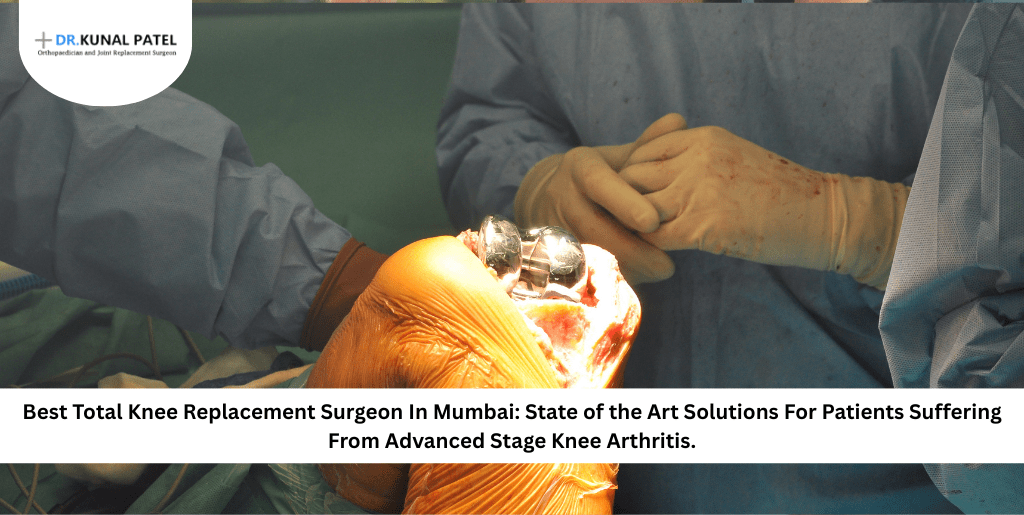
Chronic knee pain has the potential to diminish the quality of even the simplest aspects of your daily life. Pain while trying to walk, difficulty using the stairs, discomfort when getting up from a seated position, and even when trying to sleep can all be caused by knee pain. In cases where other treatments fail to provide the relief you need, knee replacement surgery can help knee replacement surgery significantly reduce pain, and improve your mobility.
If you are considering having Best orthopedic surgeon for knee replacement in Mumbai having knowledge of the procedure, potential benefits and risks, the recovery process and how to prep, can help you make the best decision. This guide has the information you may need to take the necessary steps towards your goal of living without pain.
What is Knee Replacement Surgery?
Knee replacement surgery, which is also referred to as knee arthroplasty, is the medical procedure that removes and replaces the artificial implants of a knee joint and the cartilage that has been damaged. It is a misconception that the whole knee is replaced, as in reality only the damaged sections of the knee that are joint are resurfaced using specific metal and plastic components that are designed for that purpose. The aim of this surgery is to lessen pain, and improve the function of the joint and ultimately assist the patient in resuming their daily routines.
When is Knee Replacement Surgery Needed?
Surgery is not considered the solution to all instances of knee pain. Most knee pain cases require the suggestion of multiple, nonsurgical options of treatment, that when exhausted, provide insufficient relief before surgery is deemed the proper treatment.
If you have the following, you may want to be evaluated for knee replacement:
Extreme pain while walking, climbing, and doing everyday activities
Pain while at rest
Knee swelling/inflammation that does not go away
Knee bowing (inward or outward)
Loss of self-sufficiency due to limited movement
Ineffectiveness of medications and other treatments used to relieve pain, including the use of walking aids like canes and walkers
Common Causes of Knee Damage
Severe damage to knee joints can be caused by:
Knee Osteoarthritis
Knee Osteoarthritis and its degeneration is the reason for most knee replacements. This condition is caused by the loss of cushioning in the knee joint due to the wearing away of the protective cartilage. This results in direct bone-on-bone contact in the knee joint.
Knee Rheumatoid Arthritis
Because of this autoimmune condition, there is damage of the knee joint cartilage due to inflammation, and as a result, there are stiff and painful knees.
Knee Injury-Post Traumatic Arthritis
Knee Injuries caused by fractures or ligament damage may result in Post Traumatic Arthritis due to chronic damage and degeneration of the knee joint.
What is the Right Age For Knee Replacement?
One of the biggest myths is that knee replacement is for the older generation only. Knee replacement is not age-related, but rather is based on pain level, mobility, and the person’s general health.
Knee replacement is most commonly done on those between the ages of 50 and 80; however, it is deemed medically necessary outside of that age range.
Procedures
Total Knee Replacement (TKR)
This is the most commonly performed procedure and involves replacing the damaged surfaces of the knee joint with artificial components. This is recommended when multiple areas of the knee are advanced in degeneration due to Arthritis.
Partial Knee Replacement (PKR)
In patients with compartmentalized knee arthritis, the goal of a partial knee replacement is to remove the arthritic compartment while leaving the healthy compartments of the joint intact.
Robotic-Assisted Knee Replacement
The majority of robotic-assisted systems have been designed to aid surgeons in the precise placement and alignment of articulated implants. Systems, such as the VELYS™ robotic system, utilize an even more refined approach for a surgical procedure through tailored preoperative planning with increased intraoperative accuracy.
Preparing for Surgery
Being ready for surgery is a good indicator of a successful procedure and an uneventful recovery.
Medical Assessment
An orthopedic surgeon may recommend the following:
Full assessment and documentation of your health history.
Routine laboratory tests.
Electrocardiogram and stress test, if indicated.
Evaluation and management of your health issues.
Medication alterations, if indicated, prior to the procedure.
Physical Conditioning
Prior to surgery, strengthening the musculature surrounding the knee through targeted exercises is helpful for a quicker recovery.
Preparing Your Home
Prior to surgery, you should:
Consider installing assistive handrails.
Remove items that may be tripping hazards.
Arrange for people to assist you.
Make a comfortable place for you to sleep and rest.
What Happens During Surgery?
Knee replacement surgery typically lasts one to two hours, and is done while you are under anesthesia.
The surgeon:
Removes the damaged joint surfaces.
Contours bone to accept the implant.
Places the metal and plastic components.
Tests the knee for appropriate range of motion and stability.
Closes the surgical site and initiates the recovery process.
The period of recovery after knee replacement surgery starts immediately after surgery.
Most patients are up and moving (with the aid of a staff member) within one to two days after surgery. The length of the hospital stay is contingent on the procedure and the patient’s health status.
Rehabilitation is important to the recovery and strengthening of the knee and the leg musculature and to the rehabilitation of the ability to walk and to regain balance. Long-term benefits of knee surgery are largely contingent on the frequency of rehabilitation sessions.
Recovery from Routine Activities
Patients generally are able to return to normal daily activities after a few weeks. However, full recovery from the surgery can take many months and is dependent on the individual patient.
Post-Operative Knee Activities
Relief of pain and improvement of mobility is commonly felt after surgery. Clinical studies have shown and documented that over ninety percent of patients experience an enhancement in daily activities and in the quality of life.
Patients are encouraged to participate in recreational activities that are less harmful to the knee joint, including;
walking, swimming, cycling, golfing, and light hiking.
Patients should also avoid high-impact activities that are harmful to the joint, including; jumping, running, and sports. Additionally, patients should wait until they are cleared by a physician before driving.
Reasons Why People Get Knee Replacement Surgery
People decide to get knee replacement surgery for many reasons. Traditionally, the patients are able to experience the following:
Less pain
The ability to move more freely
Better function of the joint
The ability to live a better life
More freedom
Results that don’t wither away with time if the patient goes through the necessary exercises and rehabilitation.
How to Find the Best Knee Replacement Surgeon in Mumbai?
Knee replacement surgery needs to be done correctly, but it also needs the correct and skilled knee surgeon. Consider the following when you decide which surgeon to hire:
How long of a career they have doing corrective surgery for joints?
Whether the Tech or Tools they have are up to date
Personalization of treatment plans
Therapy and Rehab support
Testimonials and the outcomes of patients
In Mumbai, you can find a very practiced orthopedic surgeon who uses technology and techniques to provide the best care to his patients.
Conclusion
Chronic pain and immobility of the knee can really hinder a person’s daily lifestyle, but having a best orthopedic doctor in mumbai can really improve the quality of life for these people. Knowing how to prepare for surgery and what to expect can really help with the process and yield optimal results.
If pain and lack of mobility in the knee is affecting your daily life and other treatment options have failed, it is time to find an experienced knee surgeon to see if you are a candidate for replacement of the knee. The current technology and techniques to perform the surgery and rehabilitation of the knee, have really improved in safety, speed, and efficacy. They allow patients to return to a normal life activities much sooner.
Author Info

No Comments