



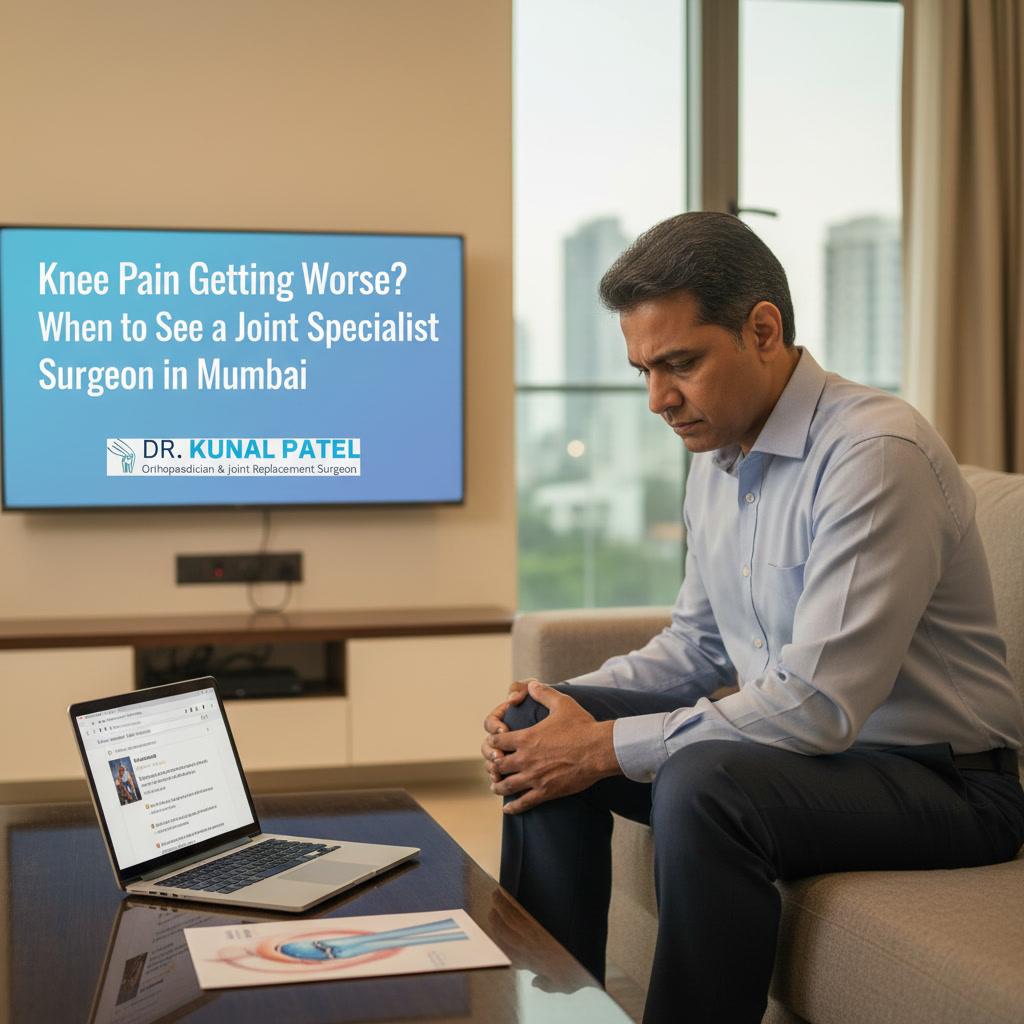
Knee pain can start quietly. You may notice a little discomfort while climbing stairs, stiffness after sitting for a long time, or pain after a long walk. At first, it may seem like something that will go away with rest.
But what happens when the pain keeps coming back?
If your knee pain is becoming more frequent, affecting your walking, disturbing your sleep, or making everyday activities difficult, it may be time to consult an orthopedic specialist. Getting the right diagnosis early can help identify the cause of your symptoms and determine whether you can benefit from non-surgical treatment or need a more advanced intervention.
For people living in Mumbai, consulting a joint specialist surgeon in Mumbai can be particularly helpful when persistent knee problems begin affecting mobility and quality of life.
When Is Knee Pain More Than Just a Temporary Problem?
Not every episode of knee pain indicates a serious joint condition. Muscle strain, minor injuries, overuse, or temporary inflammation can often improve with rest and appropriate treatment.
However, ongoing or worsening symptoms deserve medical attention.
You should consider consulting a knee specialist if you experience:
- Knee pain that continues for several weeks
- Increasing stiffness in the knee
- Pain while walking or standing
- Difficulty climbing or descending stairs
- Pain when getting up from a chair
- Swelling around the knee
- A feeling that the knee is unstable or giving way
- Reduced ability to bend or straighten the knee
- Pain that interferes with sleep
- Increasing difficulty performing household or work-related activities
Persistent symptoms do not automatically mean you need surgery. They simply indicate that the underlying cause should be evaluated properly.
Common Reasons Behind Worsening Knee Pain
Several conditions can cause knee pain to gradually become worse. The most common include osteoarthritis, rheumatoid arthritis, previous injuries, cartilage damage, ligament problems, and age-related changes in the joint.
1. Knee Osteoarthritis
Osteoarthritis is one of the most common causes of long-term knee pain. The protective cartilage inside the joint gradually becomes damaged, which can lead to pain, stiffness, and reduced movement.
You may notice symptoms particularly when:
- Walking for longer periods
- Using stairs
- Standing for extended periods
- Getting up after sitting
- Squatting or bending the knee
As the condition progresses, pain may also occur during rest.
2. Previous Knee Injury
An old sports injury, ligament injury, fracture, or cartilage problem can sometimes contribute to knee problems years later.
If your knee has never completely recovered after an injury and symptoms are becoming worse, an orthopedic assessment can help determine whether there is structural damage.
3. Rheumatoid or Other Inflammatory Arthritis
Some forms of arthritis can cause inflammation, swelling, stiffness, and pain in the joints. These conditions require proper diagnosis because treatment may be different from that used for ordinary wear-and-tear arthritis.
4. Meniscus or Cartilage Problems
Damage to the meniscus or other structures inside the knee can cause pain, clicking, locking, or difficulty moving the joint.
Depending on the condition, treatment may involve physiotherapy, medication, activity modification, or arthroscopic treatment.
7 Signs You Should Not Ignore Your Knee Pain
Knowing when to seek professional help can prevent you from simply living with increasing discomfort.
1. Your walking distance is decreasing.
If you once walked comfortably for 30–40 minutes but now need frequent breaks because of knee pain, your symptoms deserve attention.
2. Stairs have become difficult.
Pain while going upstairs or downstairs can be an early sign of a developing knee problem.
3. You struggle to get up from a chair.
Difficulty standing from a sitting position can occur when the knee becomes painful or stiff.
4. Your knee is swollen repeatedly.
Recurrent swelling should not be ignored, particularly when it occurs without an obvious injury.
5. Pain is disturbing your sleep
Knee pain that continues even while resting or sleeping can indicate a more advanced joint problem.
6. Medicines or physiotherapy are no longer helping.
If conservative treatment initially helped but your symptoms have returned or progressively worsened, it may be time for another evaluation.
7. You are changing your lifestyle because of knee pain.
If you are avoiding walks, social activities, exercise, travel, or household activities because of your knee, your quality of life is already being affected.
Does Worsening Knee Pain Mean You Need Knee Replacement?
Not necessarily.
This is one of the most important things patients should understand.
Seeing a knee replacement specialist does not mean you automatically need surgery. A consultation is primarily about finding out why your knee hurts and how severe the problem is.
Depending on your condition, treatment may include:
- Physiotherapy
- Exercise and strengthening
- Weight management where appropriate
- Activity modification
- Medication prescribed by your doctor
- Injections in selected cases
- Bracing or walking support when appropriate
- Arthroscopic treatment for certain conditions
- Partial knee replacement
- Total knee replacement
Knee replacement is generally considered when significant joint damage and symptoms continue to affect daily life despite appropriate non-surgical treatment.
When Is Knee Replacement Usually Considered?
There is no single age at which everyone should have a knee replacement.
Instead, an orthopedic surgeon considers several factors, including the severity of arthritis, pain levels, mobility, imaging findings, overall health, and response to previous treatments.
A knee replacement evaluation may be appropriate when:
- Pain is persistent and significantly affects daily life.
- Walking has become increasingly difficult.
- Stiffness is limiting movement.
- There is significant joint damage on imaging.
- Conservative treatments have not provided sufficient relief
- Knee pain is affecting sleep or independence.
- The condition is progressively limiting normal activities.
The final decision should always be based on an individual clinical assessment.
What Happens During a Knee Specialist Consultation?
A proper consultation is more than simply looking at an X-ray.
Your orthopedic and joint replacement surgeon may discuss:
- How long you have had knee pain
- When the pain occurs
- Your walking and activity limitations
- Previous injuries or surgeries
- Medicines or treatments you have already tried
- Your range of knee movement
- Swelling, tenderness, or deformity
- X-rays or other relevant imaging
- Your overall health and medical history
Based on the findings, your doctor can explain the available treatment options and whether surgery is appropriate.
It is useful to carry previous X-rays, MRI reports, prescriptions, and other relevant medical records to your appointment.
Why Choose a Knee Specialist Instead of Waiting for the Pain to Become Severe?
Many people delay a consultation because they are worried that visiting a surgeon automatically means surgery.
In reality, an early consultation can provide clarity.
A specialist can determine whether your symptoms are related to arthritis, an old injury, cartilage damage, inflammation, or another condition. Early evaluation also gives you an opportunity to discuss conservative treatment before considering surgical options.
The goal is not simply to treat pain. It is to understand the problem and choose the most appropriate treatment for your particular knee.
Advanced Knee Replacement Options in Borivali, Mumbai
When knee replacement becomes appropriate, modern techniques can offer patients different surgical options depending on their condition.
Dr. Kunal Patel provides total, partial, and robotic-assisted knee replacement procedures at Punit Hospital, Borivali West, Mumbai. As an experienced Joint Specialist Surgeon In Mumbai . His practice focuses on orthopedic, knee, and joint replacement care.
Robotic-assisted knee replacement uses technology to assist with surgical planning and implant positioning. Whether robotic assistance is appropriate depends on the patient’s individual condition and the surgeon’s assessment.
The technology is a tool; the most important step is still choosing the right treatment for the patient’s joint problem.
Looking for the Best Knee Replacement Surgeon in Borivali?
If worsening knee pain is making everyday activities difficult, a specialist consultation can help you understand what is happening inside your joint.
Dr. Kunal Patel is a consultant orthopedic and Best Knee Replacement Surgeon in Borivali . His areas of treatment include knee replacement, hip replacement, and arthroscopic procedures. The clinic website lists advanced robotic-assisted knee and hip replacement among the services offered.
Rather than waiting until knee pain becomes unbearable, consider getting your symptoms evaluated. The right treatment may not always involve surgery, but getting the correct diagnosis is the first step toward making an informed decision.
When Should You See a Joint Specialist Surgeon in Mumbai?
A specialist consultation is worth considering if knee pain is persistent, progressively worsening, or affecting your normal routine.
You should particularly seek an evaluation if you are experiencing increasing difficulty with walking, stairs, sitting and standing, exercise, work, or sleep.
Remember, knee pain is not something you always have to live with. With an accurate diagnosis and an individualized treatment plan, many patients can improve their mobility and quality of life.
If your knee pain is getting worse, don’t wait until simple activities become difficult. Schedule a consultation with an experienced orthopedic and joint replacement specialist to understand your options.
Frequently Asked Questions About Worsening Knee Pain
1. When should I see a knee specialist for knee pain?
You should consider seeing a knee specialist when pain persists, keeps returning, becomes worse, limits walking or stairs, causes swelling or stiffness, or starts affecting your sleep and everyday activities.
2. Does knee pain always mean I need knee replacement surgery?
No. Many knee conditions can initially be managed with non-surgical treatments such as physiotherapy, exercise, medication, activity modification, and other appropriate options. Knee replacement is considered only when it is medically appropriate.
3. What are the common signs of severe knee arthritis?
Persistent pain, stiffness, swelling, reduced range of motion, difficulty walking, difficulty using stairs, pain while getting up from a chair, and pain during rest can occur with advanced knee arthritis.
4. Is there a specific age for knee replacement?
No. There is no universal age for knee replacement. The decision depends on symptoms, joint damage, mobility, overall health and whether other treatments have provided adequate relief.
5. Can knee arthritis be treated without surgery?
Yes. Depending on the severity and cause, many patients can be treated without surgery. A specialist can recommend an appropriate treatment plan after evaluating the knee.
6. What is the difference between partial and total knee replacement?
A partial knee replacement replaces the damaged portion of the knee when the disease is limited to a suitable compartment. A total knee replacement replaces the damaged surfaces of the knee when arthritis or joint damage is more extensive.
7. Is robotic-assisted knee replacement available in Borivali?
Yes. Dr. Kunal Patel provides robotic-assisted knee replacement at Punit Hospital, Borivali West, Mumbai. Whether robotic-assisted surgery is suitable depends on the patient’s individual condition and surgical assessment.
8. What should I bring to my knee consultation?
Bring previous X-rays, MRI reports, prescriptions, medical records, and a list of treatments or medicines you have already tried. This can help your surgeon understand your medical history more efficiently.
9. Who should I consult for persistent knee pain in Mumbai?
For persistent or worsening knee pain, you can consult an orthopedic surgeon or a joint replacement specialist who can assess the cause and explain both surgical and non-surgical treatment options.
NAP – Dr. Kunal Patel
Name: Dr. Kunal Patel
Specialization: Consultant Orthopaedic & Joint Replacement Surgeon
Clinic: Punit Hospital
Address: Punit Hospital, Punit Nagar, S V Road, Opp. Indian Oil Petrol Pump, Near Poisur Bus Depot, Borivali West, Mumbai – 400092
Phone: +91-9372737914
Website: https://drkunalpatel.com/
Clinic Timings:
Monday–Saturday: 9:00 AM–11:00 AM and 5:00 PM–8:00 PM
Sunday: Closed
Connect With Dr. Kunal Patel
Facebook: https://www.facebook.com/Dr.KunalPatel.Mumbai
Instagram: https://www.instagram.com/drkunalpatel5926/
YouTube: https://drkunalpatel.com/youtube-videos/
If you are searching for the Best revision knee surgeon Mohali, then click here
Author Info

No Comments