



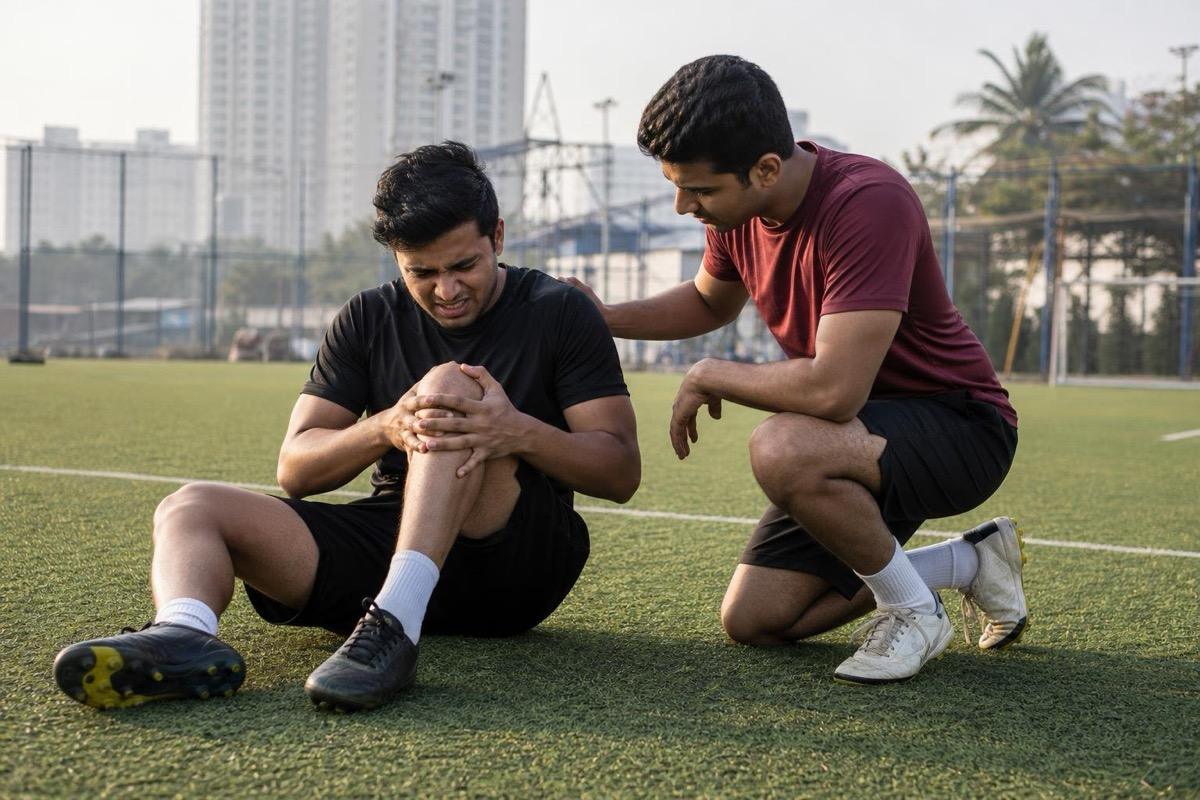
Quick answer: Many meniscus tears don’t need surgery. Small or degenerative tears in people over 40 often settle with rest, physiotherapy and strengthening over 6 to 12 weeks. Surgery, usually knee arthroscopy, is considered when the knee locks or catches, when a young person has a repairable tear from an injury, or when pain doesn’t improve with proper treatment.
A twist during a football game on a Sunday morning at Poisar. A sudden turn while getting off a crowded local at Borivali station. Squatting to pick something up and feeling something “give” inside the knee.
These are the stories we hear from patients with a meniscus tear. And the first question is almost always the same: “Will I need an operation?”
Often, no. Here’s how we decide.
What Is the Meniscus?
Each knee has two C-shaped pads of tough cartilage, one on the inner side and one on the outer side, sitting between the thigh bone and the shin bone. They act as shock absorbers and help the knee stay stable.
A meniscus can tear in two broad ways:
- Traumatic tears happen with a sudden twist, usually in younger, active people, often during sport. They sometimes occur together with an ACL injury.
- Degenerative tears develop slowly as the cartilage weakens with age, often in people over 40. A minor movement like squatting can complete the tear.
Symptoms of a Meniscus Tear
- Pain on the inner or outer side of the knee, especially when twisting or squatting
- Swelling that develops over a day or two
- A catching or clicking feeling
- Locking, where the knee gets stuck and won’t straighten fully
- The knee giving way
- Difficulty sitting cross-legged or using an Indian-style toilet
Knee pain has many causes, so an examination matters. Our guide to common causes of knee pain explains some of the others.
How Is a Meniscus Tear Diagnosed?
Diagnosis starts with a careful history and examination. Specific tests that twist and load the knee can point to a meniscus problem. An X-ray checks for arthritis, and an MRI scan shows the tear’s size, shape and location.
One important point: MRI scans in people over 40 often show meniscus tears that aren’t causing any symptoms at all. So the decision is based on your symptoms and examination, not just the scan report.
Meniscus Tear Treatment Without Surgery
For many patients, especially with degenerative tears, non-surgical treatment works well:
- Relative rest: avoid squatting, twisting and sitting cross-legged for a few weeks.
- Ice and elevation to control swelling in the first days.
- Pain relief as advised by your doctor.
- Physiotherapy: strengthening the thigh and hip muscles reduces load on the meniscus and helps the knee feel stable. This is the most important part.
- Gradual return to normal activity over 6 to 12 weeks.
Good-quality studies have shown that for degenerative tears without locking, structured physiotherapy often gives results similar to surgery.
When Is Surgery Needed for a Meniscus Tear?
Surgery is usually considered when:
- The knee is locking, meaning a torn piece is getting caught in the joint
- A young, active patient has a fresh tear that can be repaired
- The tear is combined with an ACL injury that needs reconstruction
- Pain and catching continue despite three months of good physiotherapy
What Happens in Meniscus Surgery?
Meniscus surgery is done by knee arthroscopy, keyhole surgery through two or three small cuts using a camera.
Depending on the tear, the surgeon will either:
- Repair the meniscus, stitching the torn edges together. This is preferred whenever possible, especially in younger patients, because keeping the meniscus protects the knee from arthritis later.
- Trim the torn part (partial meniscectomy), removing only the damaged piece that can’t heal.
Recovery After Meniscus Surgery
Recovery depends on which procedure was done:
- After trimming: most people walk the same or next day and return to desk work within a week or two. Sport usually resumes in four to eight weeks.
- After repair: recovery is slower because the stitched meniscus needs time to heal. Expect a brace or restricted bending for some weeks, and three to six months before returning to sport.
Our article on recovery time for knee arthroscopy has more detail.
Frequently Asked Questions
Can a meniscus tear heal on its own?
Tears in the outer part of the meniscus, which has a blood supply, can sometimes heal. Inner and degenerative tears usually don’t heal fully, but symptoms often settle with physiotherapy.
Can I walk with a torn meniscus?
Most people can walk, though it may be painful. If the knee locks or keeps giving way, see an orthopaedic surgeon promptly.
Is MRI necessary for a meniscus tear?
MRI confirms the tear and helps plan treatment, but the decision about surgery depends on symptoms and examination as well.
What happens if a meniscus tear is left untreated?
Many small tears settle. A torn piece that keeps catching can damage the cartilage over time, which is why locking or persistent symptoms need attention.
How long does meniscus surgery take?
Arthroscopic meniscus surgery usually takes under an hour, and many patients go home the same day or the next.
If you’ve twisted your knee and it’s still painful, swollen or catching, get it checked. Dr Kunal Patel (MS Orthopaedics, Fellowship in Arthroplasty and Robotic Surgery) sees patients at Punit Hospital, S V Road, Borivali West. Book an appointment.
Connect with Dr. Kunal Patel
Website: https://drkunalpatel.com/
Facebook: (https://www.facebook.com/Dr.KunalPatel.Mumbai)
Instagram: (https://www.instagram.com/drkunalpatel5926/)
GMB : https://share.google/tb7GzM6j0Qt6ZRlaF
Author Info

No Comments